2026-08-29 ·
Thermostat Issues on Your Water Heater? A San Francisco Repair Guide
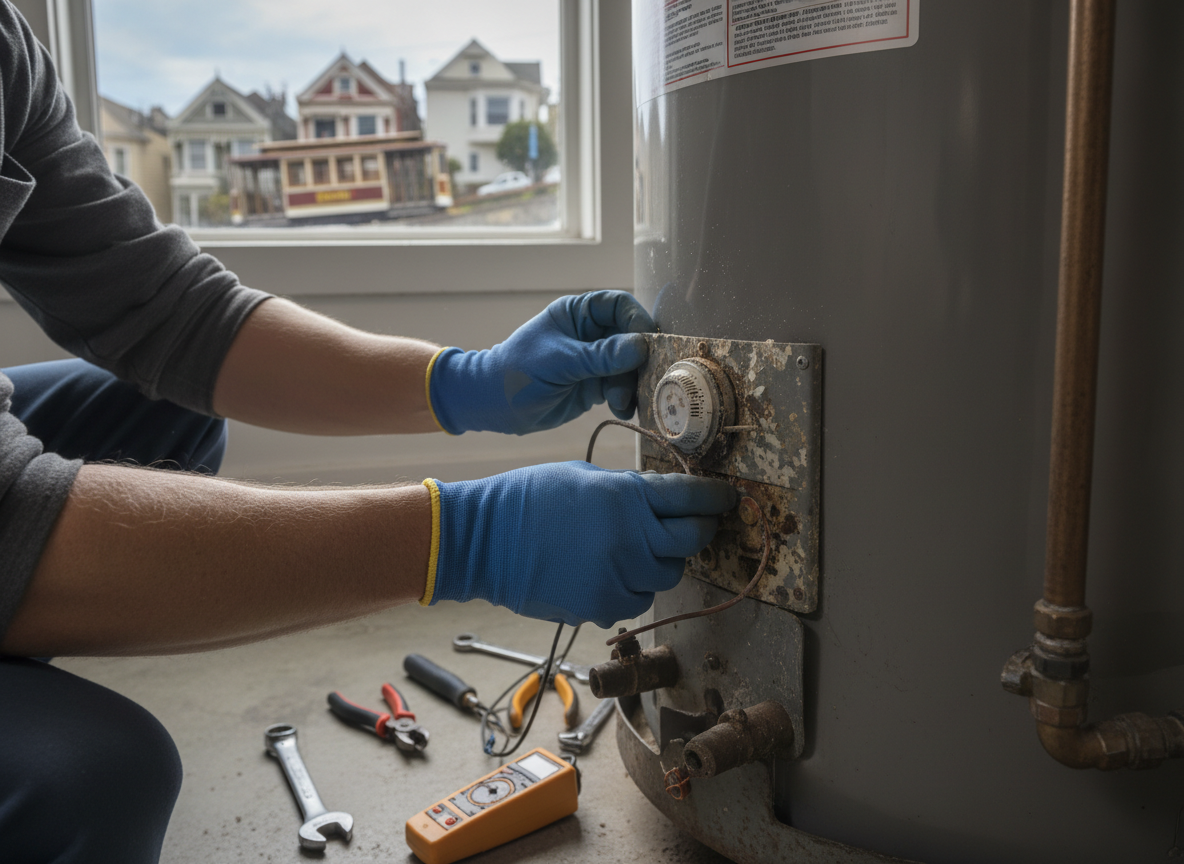
Thermostat issues on San Francisco water heaters typically show up as inconsistent hot water or no heat at all once inlet water from the regional supply drops below 55 degrees in winter. The fix usually starts with checking the upper and lower elements on 40- to 50-gallon tanks common in pre-1940 buildings rather than immediate replacement.
Why San Francisco's Climate Stresses Thermostats
The city's mild Mediterranean pattern brings cool summers but steady winter rain that raises indoor humidity in basements and crawl spaces across the Richmond District and Pacific Heights. Moisture creeps into older thermostat housings on gas models, causing erratic readings after 8–12 years of service. Homes near the Golden Gate Bridge also experience salt air that accelerates corrosion on exposed wiring and terminals. Residents in the Mission District often report the same symptoms after the first heavy rains because ground moisture migrates into foundation-level utility rooms. These conditions differ from drier inland spots like Berkeley, where thermostats last longer without the constant dampness.
Diagnosing Thermostat Failure in Local Housing Stock
Most San Francisco Victorians and Edwardians in the Castro and Haight-Ashbury still use 50-gallon tanks installed in tight closets that trap heat and humidity around the controls. Start by turning off power or gas, then remove the access panels to test continuity across the thermostat terminals with a multimeter. If the upper thermostat shows no continuity when the tank is cold, it has likely failed. Check the lower thermostat next because many dual-element units cycle incorrectly when one side sticks. In North Beach and Chinatown buildings with original plumbing, sediment from aging pipes can also insulate the sensor and produce false readings that mimic thermostat failure.
Step-by-Step Thermostat Replacement Process
- Shut off power at the breaker or close the gas valve and run hot water until the tank cools. 2. Drain several gallons from the tank to lower internal pressure. 3. Disconnect wires, noting their positions, and unscrew the old thermostat from the well. 4. Install the new unit, ensuring the sensor bulb seats fully and wiring matches factory colors. 5. Refill, restore power or gas, and verify both elements cycle within 5 degrees of the set point. Technicians serving the Sunset District often carry 120- and 240-volt models because many post-war homes switched from gas to electric. Always test the high-limit switch at the same time since it frequently fails alongside the thermostat in humid conditions.
When to Call for Water Heater Repair Instead of DIY
If the tank is older than 12 years or shows any signs of leakage at the element gaskets, replacement is usually more cost-effective than repeated thermostat swaps. San Francisco homes in Russian Hill and Nob Hill frequently have tanks tucked behind finished walls, requiring drywall cuts that add labor. Persistent issues after thermostat replacement often point to a failing dip tube or sediment buildup from the soft local water. For these cases, water heater repair covers full diagnosis and element testing. Homeowners dealing with active leaks should review the steps in Water Heater Leak Repair: What San Francisco Homeowners Should Do First before attempting further work.
Preventing Future Thermostat Problems
Annual flushing removes sediment that insulates sensors and shortens thermostat life in wet-winter neighborhoods like Daly City and the Marina District. Installing dielectric unions on older galvanized lines prevents stray current that can damage electronic controls. In Financial District high-rises with shared water heating, coordinating with building maintenance avoids pressure spikes that stress individual unit thermostats. Keeping the area around the tank clear improves airflow and reduces humidity-related failures common in the area's older housing stock.